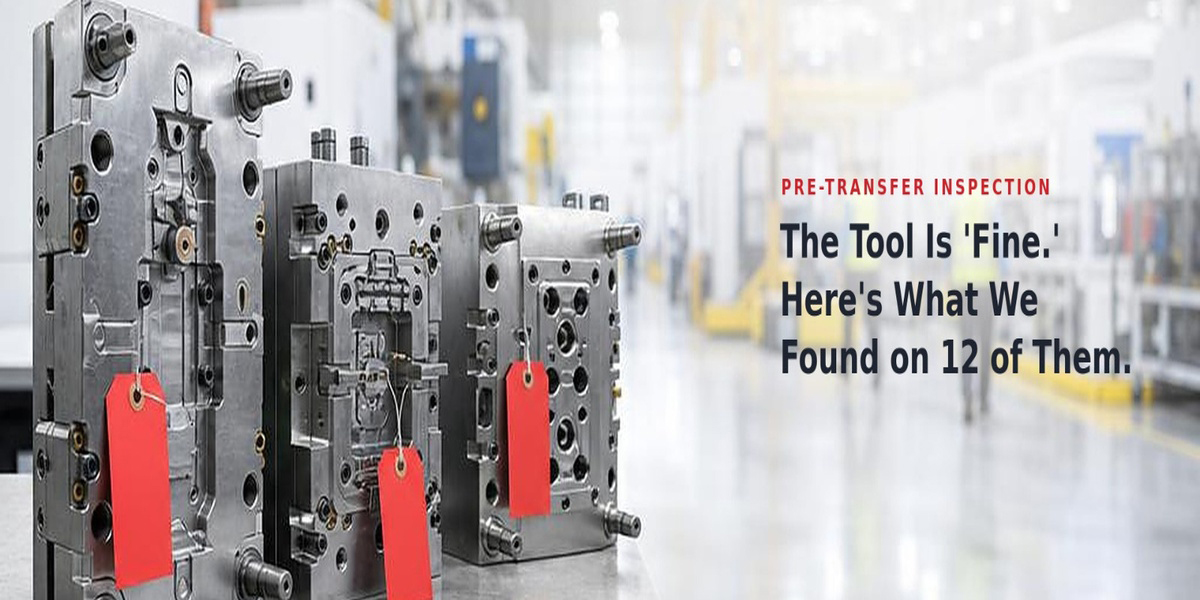
The Tool Is 'Fine.' Here's What We Found on 12 of Them.
SUMMARY
A supplier can genuinely believe a tool is ready to move and still be wrong about whether it will run at the destination. MES inspected 12 tools against a 91-check release gate before shipment. Every one of them was labeled “ready to move,” yet every one produced findings that could have become receiving-plant problems if they hadn’t been caught before shipment.
KEY TAKEAWAYS
All 12 needed machine-interface rework, and inspection gauges didn’t exist for any of them.
Six of the 12 had PPAPs submitted—but were never approved by the customer.
Every finding was cheaper to fix before the crate closed than after.
ARTICLE
“The tool is in good condition and ready to move.”
You’ll get that sentence in writing, and the person who writes it will usually believe it. It’s a statement about intent. The question you need answered is about condition: whether the tool will run on the press it’s going to and produce a part you can ship.
Those aren’t the same question, and the gap between them is where tool transfers typically go wrong.
Earlier this year our engineers spent three on-site days inspecting 12 tools before shipment—10 high pressure die cast dies and two plastic injection moulds—against our 91-check release gate. Every one of those tools was considered ready to move.
What a Pre-Transfer Tooling Inspection Can Find
Inspection gauges didn’t exist on any of the 12. Not damaged, not waiting on calibration; never built. Eight tools were missing machining fixtures or had them without clamping pads. Six needed trim or degate tooling developed from scratch. Six had no assembly fixtures.
A die can go into a press and make a casting on day one. That doesn’t mean you can finish, inspect, or ship the part.
Machine-Interface Rework Found on Every Tool Inspected
All 12 needed ejector back plate rework to suit the destination press. All 12 needed die or mould base rework for the destination machine. Nine needed changes at the sprue bush or nozzle interface.
One tool had been running at a substantially higher machine tonnage than the press it was assigned to at the destination. Nothing was wrong with that tool where it sat, but had it shipped as planned, it would have arrived at a machine that couldn’t run it.
A tool is fitted to the press it lives on. Moving it means checking that fit against a different machine, not confirming that it runs today.
Tool Condition Issues That Delay a Launch
Eleven of 12 had blocked or scaled cooling circuits. Eleven were missing cooling nipples and quick-release fittings. Eleven had rust along the base. All 12 needed stress relief before first production. One had heavy heat checking on runner and profile areas, severe enough to raise a material question about remaining life. Another had excess plugged loose pieces, reducing insert strength.
A missing cooling fitting sounds trivial, and in isolation it is, until the thread standard doesn’t match the receiving plant’s hose stock and 11 small parts on the wrong standard delay the whole setup.
PPAP and Documentation Gaps Found Before Shipment
Six of 12 had PPAPs submitted to the customer, with approval never received. A submission isn’t an approval. Six had part numbers that had been superseded, needing updated 2D and 3D data.
Nothing was wrong with the steel on these tools. But a transfer plan built on an approval that was never granted starts requalification from a much worse position than anyone planned for.
When a Supplier Won’t Warranty a Tool
On one tool, the supplier declined to assure the warranty at all. That’s useful information before the tool ships. Afterward, it converts to nothing.
Why a Standard Tooling Check Misses These Issues
A packing list shows what’s in the crate. A photo shows rust, not a blocked cooling circuit. A supplier declaration is true from where they’re standing: the tool runs fine on the machine it’s been running on for years. Finding these things takes an engineer with the tool open, measuring against the specific destination machine, working a defined list where nothing gets left blank.
Every item on this list was cheaper to fix before the crate closed. A missing gauge is a purchase order with a lead time you can plan for. A blocked circuit is an afternoon. After shipment, the same findings land at a plant that didn’t create them, on your schedule, with none of the leverage left.
Three days of inspection is not a large expenditure against that. If 12 out of 12 tools produced findings, an inspection that turns up nothing isn’t good news. It means the inspection wasn’t thorough enough.
Related: Why tooling transfers stall inside good companies. You can’t ship a part with a die alone. The commercial controls that protect a tooling move.
MES has moved roughly 240 tools since 2023 — 140 from China to Mexico, 80 within China, and 20 within India including large-tonnage die cast. We will inspect tooling you’re planning to move at no charge, including tools going to suppliers other than us.