Executive Order 14420: The Grid Equipment Rule That Reaches Inside Your BOM
Summary
Executive Order 14420, signed August 26, 2026, gives the Department of Energy authority to prohibit or condition transactions involving foreign-produced equipment on the US bulk-power system when that equipment is tied to a Covered Foreign Entity, principally China. It covers transformers, circuit breakers, inverters, battery storage, generators, turbines and control systems, and it reaches past the finished unit to Chinese-made components inside equipment built elsewhere. DOE’s implementing rules are due by December 24, 2026. Until then, the most useful step for OEM engineering and purchasing teams is mapping where each cast, forged, machined and fabricated part in that equipment is actually made.
KEY TAKEAWAYS
ARTICLE
Executive Order 14420 can read like a transformer import story. For the OEMs that build grid equipment, it’s a question about every cast, forged and fabricated part inside the unit.
That question lands in a market that was already short. Wood Mackenzie estimates power transformers are in a 15% supply shortage in 2026 and substation equipment in an 8% shortage. Generator step-up transformer lead times passed 160 weeks in the first quarter. Chinese manufacturers account for nearly all of the more than $22 billion in bulk-power equipment imported into the US since the start of 2025.
On August 26, 2026, the White House signed Executive Order 14420, declaring a national emergency over the foreign supply of bulk-power system equipment. Here’s what it covers, and where components come in.
Executive Order 14420 at a Glance
| Item | What the order says |
|---|---|
| Signed | August 26, 2026 |
| Authority | The Secretary of Energy can prohibit, condition or unwind covered transactions |
| Main focus | Equipment tied to a Covered Foreign Entity, principally China |
| Equipment named | Transformers, circuit breakers, inverters, battery energy storage, generators, turbines, industrial control systems |
| Excluded | Local low-voltage distribution networks; equipment produced in the US, even by a company headquartered in a covered country |
| Components | Equipment from allied countries that contains Chinese-made components |
| Installed equipment | DOE can require utilities to identify, isolate, monitor or replace specific components |
| Next step | DOE rules due by December 24, 2026; a pre-qualified equipment and vendor list is possible |
A Framework, Not a Blanket Ban
The order doesn’t ban Chinese equipment outright, and it puts no immediate obligations on manufacturers. It revives a 2020 order that produced a single DOE prohibition, and it goes further in two ways. It reaches components inside equipment built in allied countries, and it reaches equipment that’s already installed.
That changes the question OEMs will be asked. “Where was the transformer built?” becomes “Where was everything in it made?”
Watch for: how DOE defines covered components in the December rules. That definition will set how deep into the bill of materials a review has to go.
Castings, Forgings and Fabrications Belong in the Review
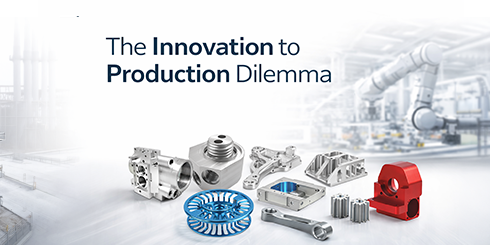
A transformer or switchgear lineup is an electrical bill of materials wrapped in a mechanical one. Bushing wells, relief valve bodies, turret flanges, lifting lugs, radiator panels, busbar and enclosure parts are cast, forged, extruded, machined or fabricated. They’re often made in different countries, by sub-tier suppliers the OEM’s records don’t name.
“Most teams can tell you where their transformer was built. Fewer can tell you where the bushing wells, flanges and radiator panels inside it were cast and machined,” says Brad Layne, Engineering Manager at MES. “That’s the part of the BOM we’d map first.”
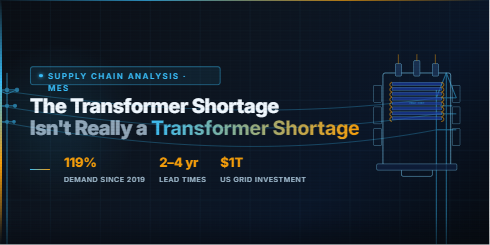
The Transformer Shortage Isn’t Really a Transformer Shortage covers how that mechanical supply chain behaves differently from the electrical one.
Ask this: Do your supplier records go below the machine shop to the foundry, forge or extrusion mill?
What Should Engineering and Purchasing Map Before December 24?
For each component in equipment headed for the bulk-power system, we’d record:
- Where the raw form is produced: the foundry, forge or extrusion mill, not just the machine shop.
- Where it’s machined, finished and inspected.
- Who owns each supplier in that chain.
- Whether a second source is qualified, and how long qualification would take if not.
- Which drawings, PPAP documents and test requirements a new source would need.
The last two items decide how fast a team can respond. A part with a complete drawing package and a defined qualification path can move to another region in weeks. A part that depends on one supplier’s undocumented process knowledge can’t. What Every Operations Team Should Understand About Lead Time breaks down where that time goes.
Start here: list the exposed parts that have no qualified second source today.
Start With the Parts Inside the Equipment
How broadly DOE will define covered components isn’t known yet. Wood Mackenzie expects the heaviest effect on data center projects that bought Chinese units to cut lead times, which pushes more demand onto the same constrained suppliers.
That makes component origin a schedule question as well as a compliance one. The teams that already know where each part is made, and have a second source qualified for the exposed ones, will have the shortest list to work through when DOE’s rules are published.
How MES Helps With Component Origin
We don’t make compliance determinations. That’s for DOE’s rules and your legal team. What we can do is make sure you have the component data to answer the question, and a path to move a part if you need one.
Frequently Asked Questions
What is Executive Order 14420?
It’s a presidential order signed August 26, 2026 that declares a national emergency over the foreign supply of US bulk-power system equipment. It gives the Department of Energy authority to prohibit or condition transactions involving equipment tied to a Covered Foreign Entity, principally China, when that equipment presents a security risk.
Which equipment does Executive Order 14420 cover?
The order lists transformers, inverters, circuit breakers, battery energy storage systems, generators, turbines and industrial control systems used on the bulk-power system. Local low-voltage distribution networks are excluded. DOE’s implementing rules, due by December 24, 2026, will define the covered equipment more precisely.
Does Executive Order 14420 apply to components, or only finished equipment?
Components can be in scope. The order targets equipment from allied countries that contains Chinese-made components, so the review extends below the finished unit to the parts inside it. How deep into the bill of materials DOE goes will depend on its final rules.
Does the order ban all Chinese-made grid equipment?
No. It isn’t a blanket ban. DOE has to identify specific equipment and transactions that present a risk, and it may publish a list of pre-qualified equipment and vendors. Equipment produced in the US falls outside the order, even when the producer is owned by a company in a covered country.
What should OEMs do before DOE publishes its rules?
Map where each component in bulk-power equipment is produced, machined and finished, and who owns each supplier. For exposed parts, confirm whether a second source is qualified and that the drawings, PPAP documents and test requirements are complete enough for a new source to quote.
MES supplies cast, forged, machined and fabricated components for transformer and switchgear programs across eight countries, with engineering and quality staff inside the supplier factories. We’ve held ISO 9001 certification since 2009 and manage component inventory across Eaton’s 20+ global locations. Send us a bill of materials for a transformer or switchgear program, and we’ll identify where each cast, forged and fabricated component is made today and where it could be qualified elsewhere.